


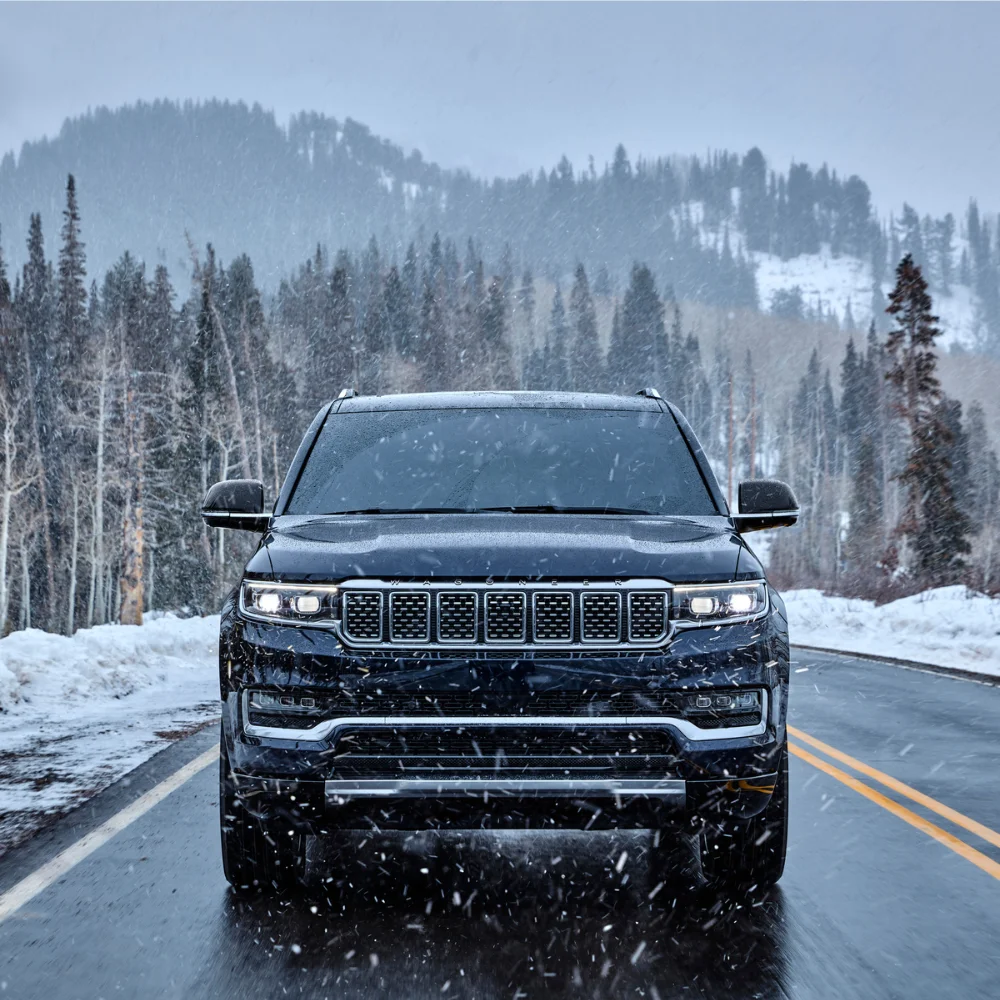
Winter sneaks up fast in Greater Hartford. One chilly morning, the first frost turns your driveway and side streets into slick glass.
If you drive a Jeep, you already have an edge. Let’s break down how Jeep 4×4 systems help you stay in control—and what you can do to drive safer when roads get icy.
Why First Frosts Are So Risky
The first cold snap often comes after mild, rainy days. Moisture lingers on bridges, shaded curves, and painted lines.
When temperatures drop overnight, that thin film freezes. You get “black ice,” which is hard to see and easy to underestimate.
How Jeep 4×4 Helps on Slick Roads
4×4 sends power to all four wheels. This helps you get moving without spinning. It also balances traction when one or two tires lose grip.
Jeep systems are paired with smart tech like traction control, anti-lock brakes, and stability control. These systems sense slip and react in milliseconds.
Know Your Jeep’s 4×4 System
Different Wranglers and other Jeep models can have different systems. Here are the most common ones and when they help.
Command-Trac (Part-Time 4×4)
-
Best for: Loose surfaces—snow, ice, gravel, mud.
-
Modes: 2H (rear-wheel), 4H (part-time), 4L (low range).
-
Tip: Do not use 4H on dry pavement. It’s meant for surfaces that let tires slip a little.
Selec-Trac (Full-Time 4×4)
-
Best for: Mixed conditions—wet, patchy ice, changing weather.
-
Modes: 2H, 4H Auto (full-time), 4H Part-Time, N, 4L.
-
Tip: 4H Auto can be used on dry pavement because it can send power where it’s needed without binding.
Rock-Trac (Off-Road Focused)
-
Best for: Low-speed control on steep or uneven terrain.
-
Modes: 4H and 4L with very low crawl ratios.
-
Tip: Great for icy hills and slow maneuvers, but not needed for normal plowed roads.
Always check your owner’s manual for the exact modes your Wrangler has. Different trims and years may vary.
Simple Rules for Ice and Frost
-
Slow is smart. Lower your speed and increase following distance to at least 6–8 seconds.
-
Be smooth. Gentle steering, light throttle, and steady braking reduce slip.
-
Look far ahead. Scan bridges, shaded curves, and ramps for gloss or shine.
-
Trust the tech. Keep traction control on unless you’re stuck and need a light “rocking” motion.
Step-by-Step: Set Up Your Jeep Before a Frosty Drive
-
Check tires. Make sure the tread is healthy and the pressure matches the door-jamb sticker. Cold air lowers PSI.
-
Clear glass fully. Defrost windshield, side windows, mirrors, and lights. See and be seen.
-
Pick your 4×4 mode.
-
Patchy ice or changing conditions: 4H Auto (Selec-Trac).
-
Consistent snow/ice: 4H (Command-Trac or Part-Time).
-
Steep, slow, very slick: 4L.
-
-
Set the climate smartly. Use the defroster to keep the glass dry.
-
Secure cargo. Loose items can shift when traction changes.
Step-by-Step: Starting on Ice Without Wheelspin
-
Shift to the right mode. Use 4H on consistent slick surfaces.
-
Feather the throttle. Apply very light pressure and let the system find grip.
-
Short-shift if needed. In a manual, start in second gear to reduce torque.
-
Steer straight. Keep the wheels pointed where you want to go until you’re moving.
Step-by-Step: Climbing an Icy Hill
-
Build a little momentum first. Approach with steady speed.
-
Stay in 4H or 4L. Use 4L for slow, controlled climbs.
-
Hold a steady throttle. Don’t stab the gas. Tiny inputs only.
-
Avoid mid-hill stops. If you must stop, re-start gently and straight.
Step-by-Step: Braking and Cornering on Frost
-
Brake early and lightly. Let ABS work; you’ll feel pulsing in the pedal.
-
Turn before you brake. Do one thing at a time—first slow, then steer, then accelerate.
-
Aim for the open path. Look where you want to go, not at the hazard.
Step-by-Step: Recovering From a Skid
-
Stay calm. Lift off the gas; don’t slam the brakes.
-
Steer into the slide. Point the front wheels where the rear is sliding.
-
Let the systems help. Stability control and 4×4 will work as you ease back to center.
Tires Matter More Than You Think
4×4 helps you go, but tires help you stop and turn. Winter-rated tires provide softer rubber and special tread for cold grip.
If you drive early mornings on I-84, I-91, or local bridges near the river, winter tires are a strong safety upgrade.
What 4×4 Can—and Can’t—Do on Ice
4×4 gives you better traction to start moving and keep momentum. It does not shorten stopping distance on ice.
You still need space, patience, and good tires. Think of 4×4 as your assistant, not your shield.
When to Use 4H vs. 4L
-
Use 4H for speeds above parking-lot pace on snowy or icy roads. It balances traction and steering.
-
Use 4L for very slow, steep, or technical sections. It multiplies torque and control but is not for higher speeds.
Bridge and Ramp Strategy for Hartford Winters
Bridges freeze first because cold air flows above and below. Ramps often sit in shade and keep frost longer.
Slow down before you reach the bridge or ramp. Keep a constant speed, avoid lane changes, and don’t brake hard on the slickest spots.
Quick Checklist Before the First Frost
-
Wipers in good condition
-
Washer fluid rated for low temps
-
Tire tread depth checked
-
Battery tested if it’s older
-
Emergency kit: scraper, gloves, blanket, small shovel, traction aids
Frequently Asked Questions
Do I need to use 4×4 every time it’s cold?
Not always. If the pavement is dry, 2H is fine. Use 4H when the road is snowy, icy, or slushy, or when conditions change block by block.
Can I use part-time 4H on dry pavement?
No. Part-time systems can bind on dry, high-grip surfaces. Use them only where tires can slip a bit, like snow, ice, or gravel.
What about 4H Auto?
If your Jeep has Selec-Trac with 4H Auto, you can use it on dry or wet pavement. It adjusts power automatically and prevents binding.
Does 4×4 help me stop faster?
No. Braking distance depends on tire grip and speed. Slow down early and keep your distance.
Should I turn off traction control on ice?
Keep it on for normal driving. Turn it off only briefly if you’re stuck and need to rock the vehicle free, then turn it back on.
Is 4L overkill for city streets?
Usually, yes. 4L is for slow, steep, very slick situations. Use 4H for normal winter roads.
Do winter tires make a big difference?
Yes. They improve grip when temperatures drop, even on “dry-cold” days. They help with turning and stopping, not just starting.
How fast can I drive in 4H?
Follow posted limits, but reduce speed in winter. 4H helps with traction, not cornering physics. Smooth, steady inputs are key.
Putting It All Together
First frosts are tricky because they catch us off guard. With a Jeep 4×4 system, you get tools that react faster than any human can.
Add the right mode, gentle inputs, and winter-ready tires, and you’ll feel steady even when surfaces aren’t.
Visit Gengras CDJR Hartford
If you’re upgrading for winter, we can help you compare trims, 4×4 systems, and tire options. Our team will walk you through real-world setups for Connecticut roads.
Looking for a 2025 Jeep Wrangler for sale in East Hartford, CT? Stop by Gengras CDJR Hartford to test-drive, explore winter packages, and get advice tailored to your commute.
Final Winter Driving Tips
-
Plan extra time so you never need to rush.
-
Keep your gas tank at least half full in the cold.
-
Use gentle, steady moves—accelerate, brake, and steer with care.
-
Don’t be afraid to pull over and wait out sudden icy bursts.
Your Jeep is built for this. With the right setup and a calm approach, first frosts won’t catch you off guard. Stay safe out there, and if you want help dialing in your Jeep for winter, our Hartford team is ready.